
Before the last decade or so, living out of your car wasn’t exactly considered something to aspire towards. Anyone who grew up watching Saturday Night Live in the 90s will remember Matt Foley—one of Chris Farley’s most famous recurring characters—the comically tragic (de)motivational speaker whose definitive trait is that he ‘lives in a van down by the river.’ More cautionary tale than inspirational, Matt Foley typified the decidedly negative stereotype of someone living out of their car: an adult whose life had gone off the rails, presumably with a series of poor life choices to blame for his desperate straits.
In the last five to ten years however, mobile living has experienced a serious rebranding. Living in your car has become cool, desirable even, with many 20- and 30-somethings buying old sprinter and conversion vans, school buses, airstreams, etc., to fix up in pursuit of life on the road. Many vintage ‘shaggin wagons’ from the 60s and 70s have gotten serious updates from industrious and wanderlusty young adults—the millennials’ homegrown ‘Pimp My Ride’ equivalent, but with a bohemian, Pinterest-worthy twist.

Rather than the territory of those going through an existential rough patch, in 2021 living out of your car represents unbounded freedom, adventure and an exercise in conscious minimalism. With everyone being landlocked during the pandemic and most 9-5 jobs going remote, many people retreated from the cities into more rustic environments, making use of looser schedules to explore the great outdoors. Nomadland won the Academy Award for Best Picture last year, an indicator of people’s interest in the subject, which has only continued trending upwards.
While I admire the ingenuity of many of these van build-outs, they’re not exactly the most attainable for the everyman wannabe wanderer. Building and installing bells and whistles like custom cedar paneling, electric circuitry, a water filtration system, and other luxuries requires not only a lot of time and planning but also a lot of money. As beautiful, creative, and cleverly engineered as these revamped vans are, they’re just not within a realistic realm for many of us to put together in terms of time or budget.
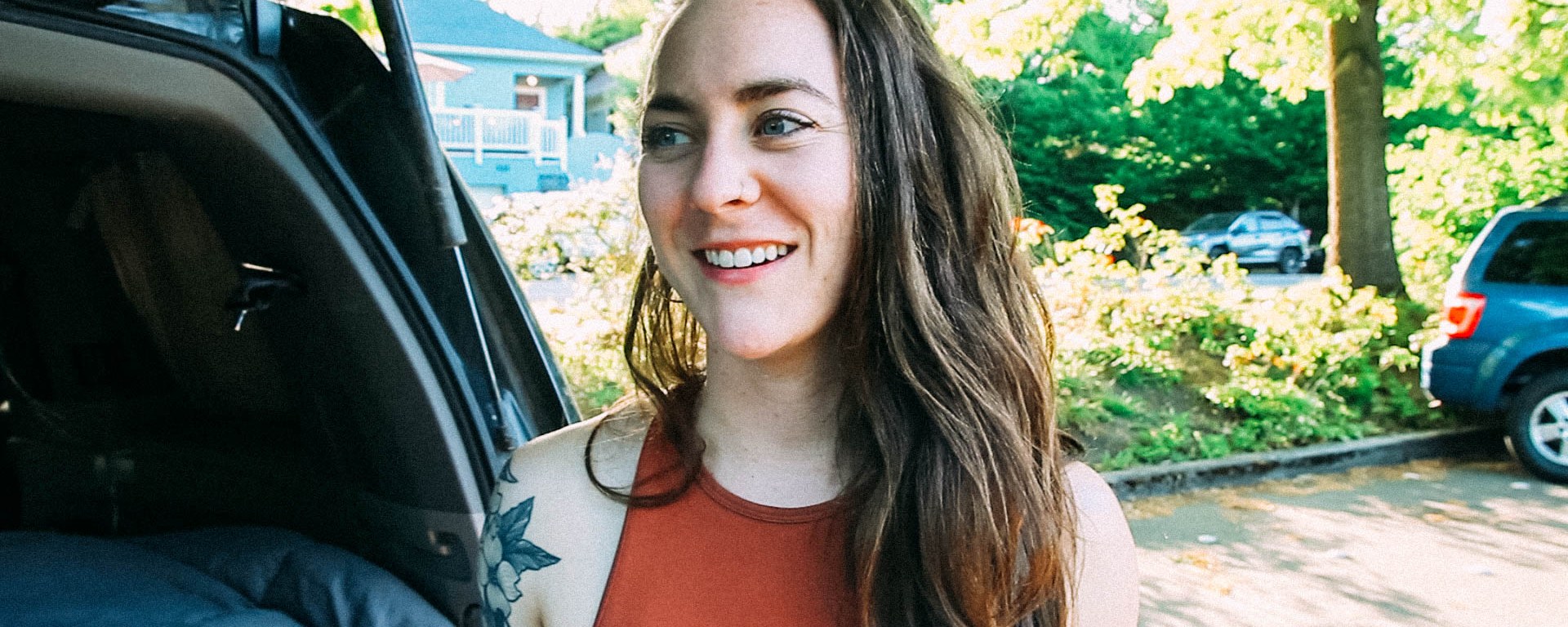
Enter Queen Val and her trusty steel steed, “The Fortress.”

I first met Val when we worked together at the Green Tortoise hostel four and a half years ago, her bunk adjacent to mine in a dorm we shared with six other people. A few of us on the team lovingly referred to her as Queen Val, as she embodies the definition of a badass. She’d spent two summers working at Yellowstone National Park before her time at the Tortoise, and after we parted ways in early 2017 she went on to through-hike the Appalachian Trail with a friend in the summer and fall of that year.
In 2018 she returned to the greater Seattle area to work at Alpine Ascents International, and after a pandemic-related layoff, decided to give van life a go while living out of her SUV last fall. Val spent a large portion of last winter climbing and hiking in the vast, rust-colored Martian landscapes of Utah and passed through Seattle a few weeks ago on her way up to Alaska. (In classic Valerie the Valkyrie style, she’s got a summer gig lined up glacier guiding in the Matanuska River Valley.)
I was lucky enough to get some quality time in with Val during her short stint in town, catching up with some of our other Tortoise homies one weekend, as well as during a day trip she and I took to Orcas Island the following weekend. Val generously drove us up to the San Juans in her vehicle/home and indulged my inquisitiveness regarding her current mobile routine.
I asked Val various questions about the logistics of living out of her car throughout the day—what she eats when on the road, where she parks to sleep, where to shower, etc. Her responses were so thrifty, practical, and easily accessible, I figured it was information that others would be interested in as well.
As hastily as I tried to copy down all of her advice in the Notes app on my phone, it occurred to me that a video would probably be the most efficient way to record all of her wisdom and expertise. Val was totally game, and we met up the next day to film this guy:
Below I’ve transcribed the essential outline of what Val covered in our interview.
Val’s Car (0:28 – 1:19)
Val purchased a used 2012 Honda Pilot last fall. ‘The Fortress’ had about 154,000 miles on it when she purchased it from her trusted longtime mechanic in Seattle. She used to drive a ’95 Toyota Corolla, but knowing that her car was going to serve as her home-base for a decent chunk of the time that she was on the road, her main requirements were to find a vehicle that she’d be able to lie down in and that could comfortably fit all of her stuff.
She’s been living out of the Fortress since last October, and estimates that she’s driven around 10-11,000 miles since she got it.
Storage System (2:48 – 7:17)
Everything that she owns is with her in the car, and Val removed the backseats to make more space for her things. Though she goes into this in more detail in the video, this includes:
- All of her climbing, hiking and camping gear: climbing ropes/gear, coats and jackets for different weather conditions, tents, sleeping bags, and backpacks (for day trips and longer).
- A suitcase of clothes, including bags of toiletries.
- A variety of books, which includes climbing and mountaineering guides.
- Important documents like her birth certificate, passport, and the title of her car.
- Charging cables for her phone and other devices, as well as external battery chargers.
How does she store things?
- Bags, bags, bags: for everything from toiletries to climbing ropes to cooking utensils, Val uses a variety of color-coded bags to store her things. She has a very deliberate organizational system, which she covers in more detail throughout the video.
- Plastic storage bins: used mostly for outdoor gear.
- Old wine boxes: acquired from Trader Joe’s upon checkout, Val uses old wine boxes to store her food and kitchenware.
- Cooler: used for storing perishable food items.
Charging Electronics (7:17 – 8:54)
One of Val’s favorite aspects of the Fortress is the multiple charging ports offered throughout the car—a cigarette lighter in the dash, two USB outlets in the center consul, and even a few in the backseat area.
She also relies on several rechargeable external battery packs and a rechargeable solar pack, which she leaves charging on her dashboard throughout the day.
Food & Diet (8:54 – 13:29)
As an Exercise Health and Science Major, Val’s diet is a model of health for us all. She prefers to keep minimal ingredients on hand that have maximum nutritive value. In the video, she shares a few of her portable pantry staples, including:
Legumes/Pulses
Val eats lots of legumes and pulses, relying heavily on beans and lentils for their high fiber and high protein content.
She admits she’s often guilty of cracking open a can of beans—black beans, red beans, garbanzos, etc.— and eating them straight up as is, but will sometimes add pesto to her chickpeas and hot sauce to black beans to spice things up a bit.
She also enjoys pastas that are made from beans and veggies, in particular the red lentil sedanini from Trader Joe’s—she’ll cook it and add either olive or coconut oil, stirring in spinach or another leafy green and additional seasonings.
Fruits & Vegetables
Val eats lots of carrots (usually with hummus), and likes to keep a bag or two of greens in her cooler—kale, spinach, spring greens, arugula, etc. Sundried tomatoes are also a great addition to pastas or wraps! She likes apples and bananas with peanut butter as well.
Wraps
Veggie wraps are one of Val’s dietary staples. While any tortilla will work as a base, she prefers the Quinoa-flour tortillas from Trader Joe’s, shying away from gluten and maximizing her protein intake.
She’ll often used hummus or mashed avocado for a base, adding any type of green and sriracha on top. (Hot tip from Val: add the everything bagel or mushroom seasoning from Trader Joe’s).
Flavored Tuna Packets
Adding tuna to wraps packs a little extra protein in.
Peanut Butter
Who doesn’t love peanut butter with bananas? One of Val’s go-to combos on account of the potassium and protein double punch. (She also eats PB by the spoonful regularly; we’ve all been there.)
Condiments and Cooking Oils
- Sriracha and taco bell fire sauce
- Olive oil
- Coconut oil
- Soy sauce
Seasonings
Val is a self-confessed seasoning fiend, and keeps these savory spices within her daily rotation:
- Garlic powder
- TJ’s Everything Bagel seasoning (which she’ll add to hummus)
- Umami mushroom seasoning blend
- Vegan chicken-less seasoning salt—tastes like bouillon
Utensils/Storage
Val keeps it simple, with two main cooking items in her arsenal: a jet boil, and a cooler for keeping perishable items cold. She keeps a bag of basic utensils on hand, including a can opener, chopsticks, and silverware.
Though she doesn’t cook too much when she’s on the road, the jet boil comes in handy for boiling water, sautéeing veggies and making hot drinks. Her one luxury item is a rechargeable handheld frother, which she uses to make her ever-important Mudwtr latte in the mornings.
As mentioned above, when Val goes to Trader Joe’s she’ll ask to have her groceries put in a box when checking out, using old wine boxes to store her dry items.
Sleeping Setup
One of the things I was most curious about was how and where Val gets decent sleep on the road. Where do you park your car to sleep? How do you avoid getting in legal trouble? How do you block out light from the outside/have any privacy?
Bed (1:32 – 2:43)
Val’s bed is a simple Coleman cot, made more luxurious by the aid of a memory foam mattress topper. She has a bungee sheet covering both the cot and mattress topper, and sleeps with a comforter on top.
Window Coverings (13:30 – 14:52)
Aside from the windshield, driver and passenger side windows, Val covers all the windows of her vehicle with homemade Reflectix cutouts, an insulation material available at most home improvement retailers. In the video, she talks about the process she went through to measure and properly fit the Reflectix material to her specifications.
She hangs a scarf up behind the two front seats, so as to provide a bit of privacy as well as blocking out light from the cockpit area.
Lighting Sources (14:53 – 15:30)
To add a little ambiance and make things cozier, Val has some battery-operated twinkle lights strung over the roof of her sleeping area in the back. She also uses a solar-powered lantern in the evenings.
When she’s sleeping in urban areas she uses lights that aren’t as bright, like her headlamp (in red light mode) or her phone’s flashlight.
Overnight Parking
Generally, Val prefers to park in more remote, natural areas when she can—either in the forest or outdoors—though she did have some good advice about where to park discreetly in more metropolitan areas as well.
In Urban Areas (15:54 – 17:16)
Sort of goes without saying, but Val generally tries to keep a low profile when parking in cities or more populated areas. A few of her general guidelines:
- Look for more well-lit areas to park overnight: parking around other cars and directly under streetlamps is a good way to deter theft.
- Park in front of apartment buildings: there tends to be quicker turnaround rates for cars outside of an apartment complex as opposed to single-family homes, making an extended stay less obvious.
A Few Other Options:
- Truck stops and rest stops: just be aware of your surroundings and listen to your intuition. (Goes without saying, but if a place feels dodgy, bail.)
- Walmart parking lots: apparently it’s totally legal to park and sleep in your car in Walmart parking lots. Maybe not a first choice, but nice to be aware of in a pinch!
Be sure to always check and be aware of the regulations for the city where you’re staying ahead of time, as the fine print regarding sleeping in your car varies from place to place.
In Remote Areas (17:17 – 17:59)
- National Forests: you can park pretty much anywhere in national forests, where dispersed camping is more readily available. She advises parking in places where it’s clear that people have already been there, with fire rings or cleared ground being a good indicator that you should be okay to park there overnight.
- Forest Service Roads (labeled as NF-## on maps) and BLM Lands: according to Outdoor Project, both Forest Service Roads and BLM (Bureau of Land Management) lands are “usually hubs for dispersed campsites and tend to line major roads that run through public land.”
** Remember that you’re not allowed to stay at any one particular campsite for more than 16 days. After that time period, you have to relocate to a dispersed site that is at least 5 miles away. There are various rules to follow regarding camping on public lands, and this article from Outdoor Project has some good general guidelines.
Bathrooms & Showering
Keep a ‘Pee Bottle’ Handy (18:13 – 20:44)
While Val mentions that public restrooms aren’t super hard to come by, she’s an advocate of having a pee bottle on hand for emergency use. Particularly when sleeping in a more public area, it comes in handy! She uses a reusable canteen from Nalgene, which she prefers because she can pack it up more tightly in her backpack when not in use. However any bottle with a particularly wide opening—such as a Gatorade bottle—should work just as well.
Individuals with female anatomy will probably prefer to use a funnel in addition, as aiming requires a little more dexterity. After emptying the bottle out, she’ll rinse it and hang it to dry outside of her car, looping the lid through one of her door handles to air it out.
Having been on quite a few roadtrips myself, I’d advocate for gas station and fast food restaurant bathrooms, though on the whole the latter option seem to generally be more sanitary.
Showering (20:45 – 21:36)
A list of places where a good shower can be found on the road:
- KOAs (Kampgrounds of America): according to Wikipedia, KOA is the world’s largest system of private campgrounds, with almost 500 locations scattered throughout the US and Canada. Even if you’re not staying at a KOA, they usually offer a flat rate that you can pay for shower access.
- Truckstops
- YMCAs and Gyms: though a bit more dicey with COVID, oftentimes you can pay a flat fee at a local gym or YMCA in order to use their shower facilities.
- Make use of local contacts: if you have friends in the area, ask if they wouldn’t mind you using their shower!
Val also does whatever she can to max out her between-shower periods, including using dry shampoo, deodorant, and taking ‘spit baths’ with wet wipes. She freely admits that it’s easier to be less diligent about hygiene when you’re living a more outdoorsy lifestyle and surrounded by fellow enthusiasts. As you can see in the video, she has pretty lengthy locks, and will usually keep her hair in a braid in order to avoid serious tangles.
In my own experience, if you’re near a national park—particularly a very popular one—camping outfitters, hostels, recreation & aquatic centers and RV parks in the area will often offer shower access (usually for a fee). In towns like Moab and Springdale UT—outside of Arches/Canyonlands and Zion, respectively—if you ask around, locals will usually be able to point you towards publicly available shower and laundry facilities.
Val’s Must-Have Items (21:37 – 22:35)
A few things that Val is really glad she has with her:
- Pee Bottle: “It’s really useful, and has saved me a lot of times when bathrooms weren’t accessible.”
- A Kindle: saves a lot more space than lugging all of her books around.
- Memory Foam Mattress Topper: “I kind of undervalued comfort when I first started living out of my car, so having a nice mattress is awesome.”
- A Foldable Camp Chair: “It’s way more comfortable, and it’s nice to be able to set up outside your car and chill.”
Car Upkeep & Maintenance (22:36 – 23:12)
If you don’t already know how to change a tire, Val recommends getting acquainted with the process before setting off for life on the open road.
She has the oil changed every 2,000 miles, and advises having it done at Jiffy Lube: “If you go to Jiffy Lube, they’ll automatically check your tire pressure and fluid levels in addition to changing the oil.” While their services are a little more expensive, she considers it worthwhile in the assurance she gets that her car is good to go.
After Val and I finished filming, we met up with her buddy Sean, a former coworker from Alpine and fellow van lifer.
Sean leads summit tours of Mount Rainier, and currently lives out of his Honda Element full-time—christened “The Hotelement”—and kindly let us have a peek inside.
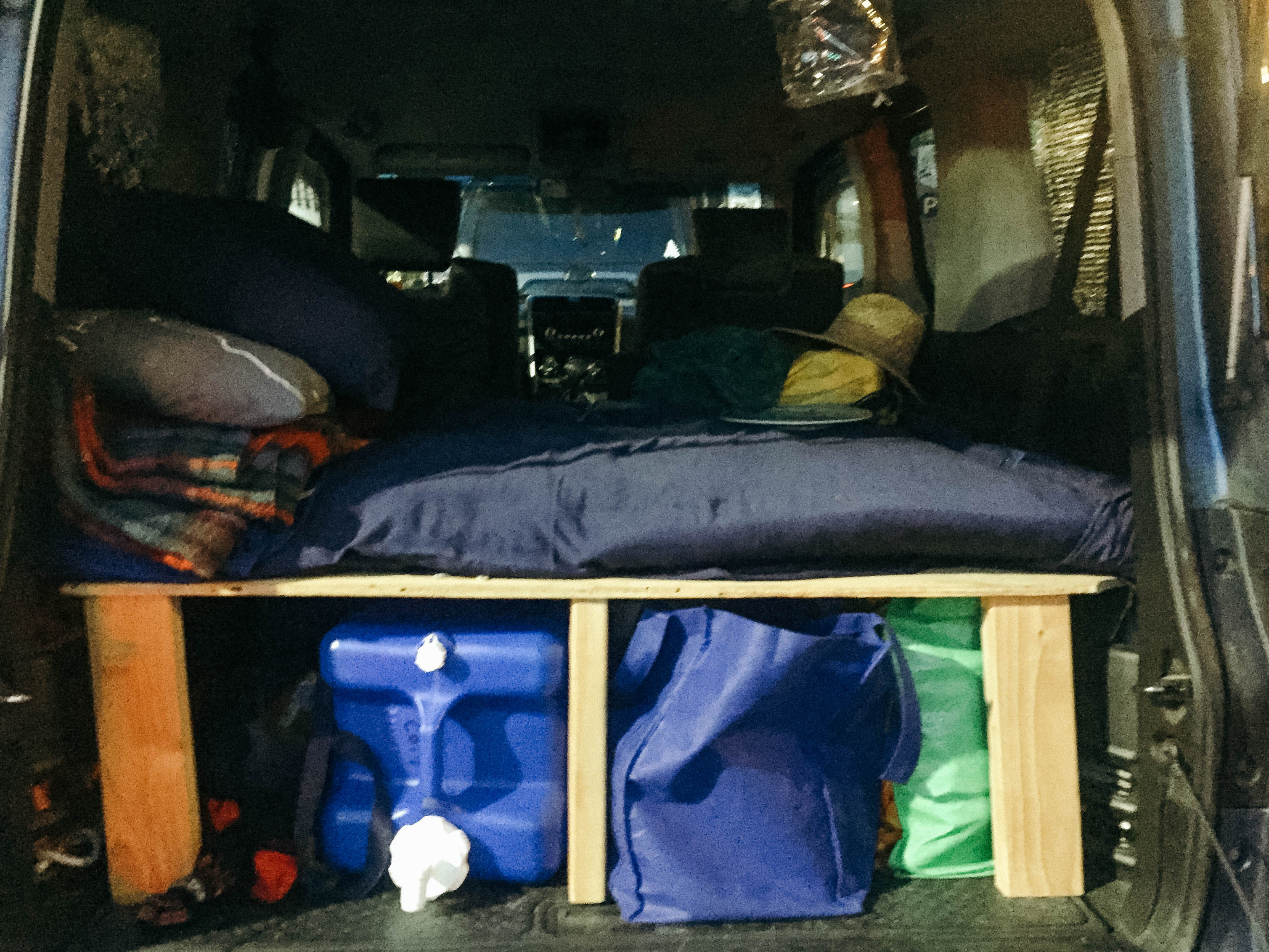
As you can see, his build-out is a little more advanced than Val’s—he’s been in the game a little longer, and has a posh wooden bed frame that also provides plenty of storage underneath. And what’s that I spy, more Reflectix in the windows? If u kno, u kno.
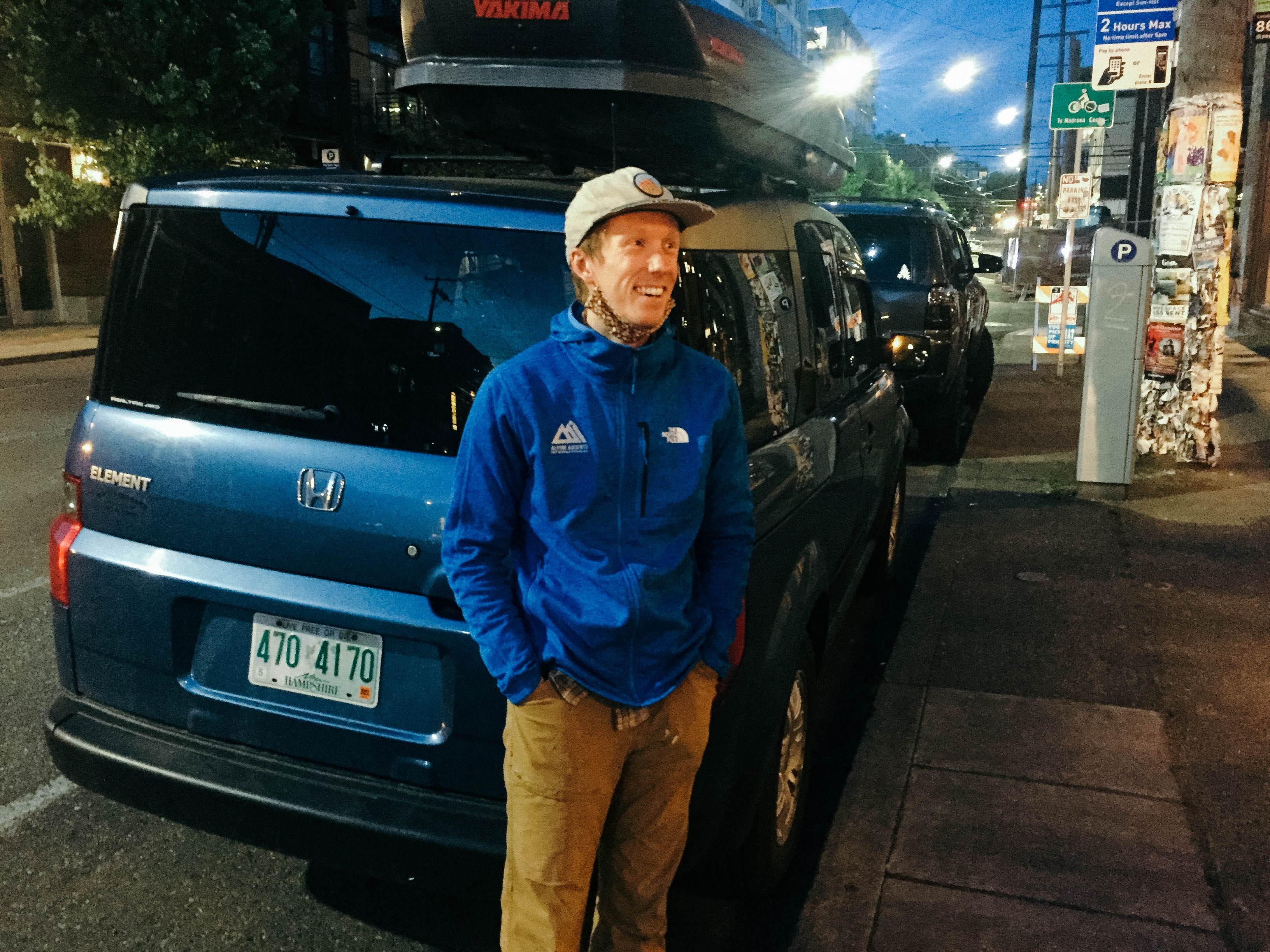
Thanks again to Val and Sean for the illuminating glimpse into van living culture!
Would you ever give Van Life a go? Or—for the more experienced ramblin’ men and women out there—any other details that we missed?
Let me know in the comments!
 blogdungsroman