
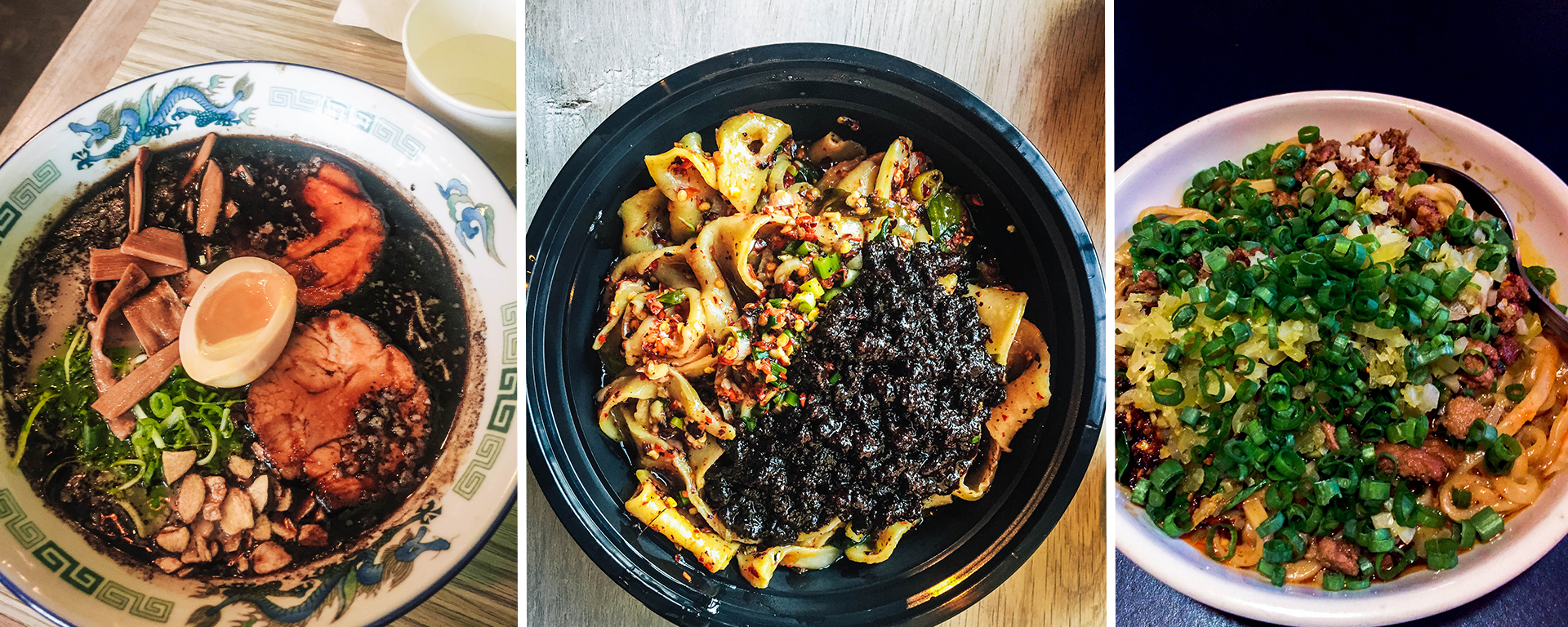
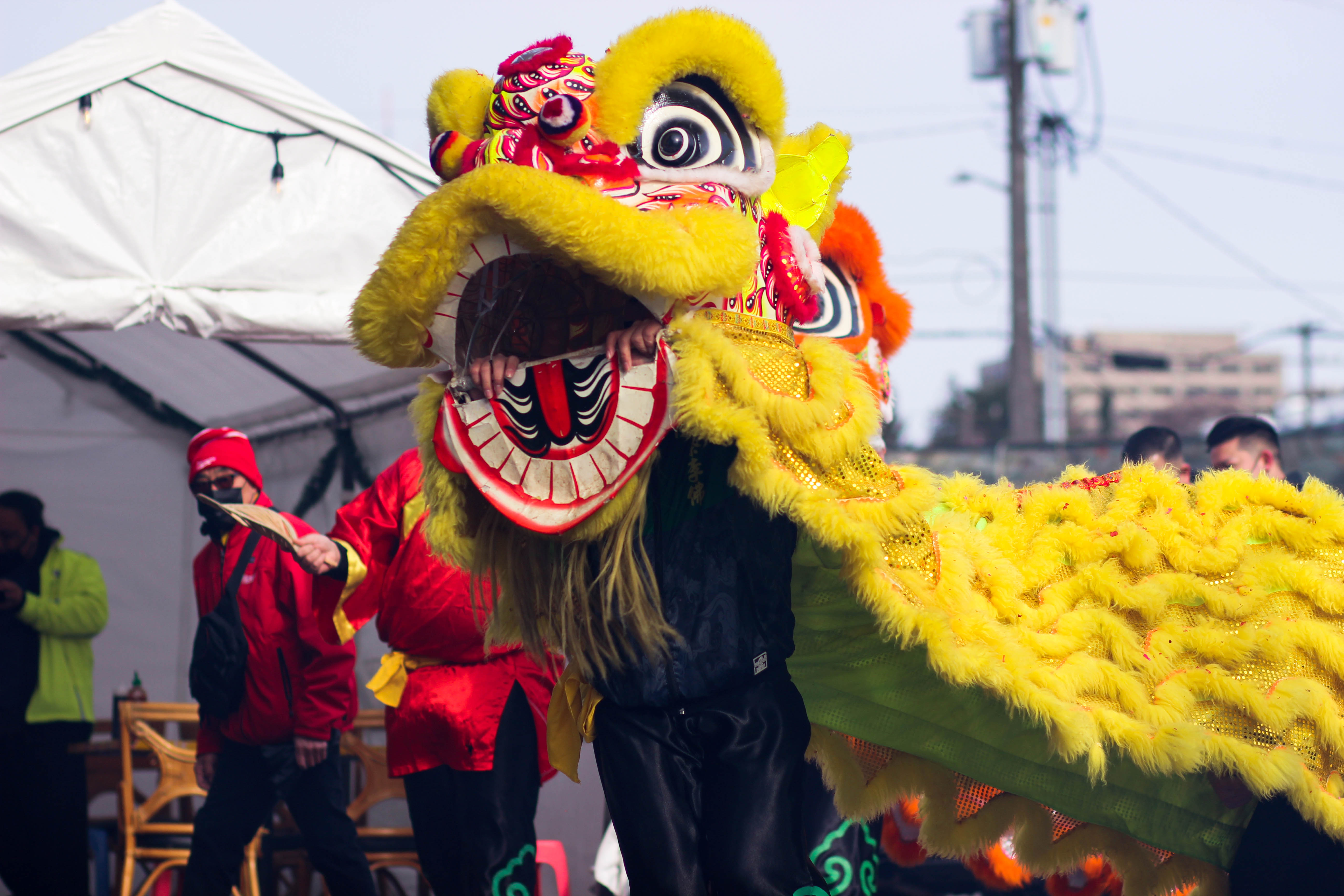
With one of the most well-established Chinatowns in the country and a bustling International District, it comes as no surprise that Seattle’s noodle game is on-point. And while the ID is an obvious starting point for most in their quest to find Seattle’s best Asian-inspired dishes, it would be extremely short-sighted to overlook that the city as a whole is drunk with phenomenal Asian cuisine.
During my recent Seattle sojourn, I was very much on a noodles kick, particularly anything spicy and Szechuan-influenced. For seven months, I couldn’t seem to get enough chili oil in my life, constantly on the hunt for fiery noodles at different restaurants and bars in the Capitol Hill neighborhood, where I was living at the time.
This list barely scratches the surface in terms of the variety and wealth of offerings in the Seattle pan-Asian scene, as there’s a panoply of delicious places to choose from (choice overload, anyone?). And if I’m completely honest, it’s generally pretty hard to find a bad meal in Seattle.
But one of the best parts about this noodle-y round up? In a city that isn’t exactly famous for its affordability, none of these spots are completely out of the realm of reason. So, for all the strapped foodies out there—here’s a rundown from a (semi)local of the best spots to nood’ out on a budget in Capitol Hill, Seattle.
Qin Xi’An Noodle House ($)
For the bounciest, thicc-est hand-pulled noodles in Seattle.

I suppose Qin Xi’an is where my noodle fetish really gained traction. One day this spring, I was craaaaving some delicious noods but didn’t want to trek all the way down to the ID to find them. After googling “best noodles in Capitol Hill” or something of the like, this little spot was one of the higher-rated, more authentic-looking options that popped up.
Xi’an is the capital of the Shaanxi province in the Northwest of China, which borders Szechuan province. Known for its chillier climate, the food in Shaanxi “tends to be spicy, greasy and meaty to keep the people warm.” (Not so different from a Seattle winter, it seems.)
One Google review described Qin Xi’an as a “diamond buried in the sand,” which is pretty accurate. This place really feels like you’re back in Asia, for a few different reasons. It’s a true hole-in-the-wall, with a simple, unadorned interior, the menu written in Chinese characters on a blackboard above the less-than-glamorous open-air kitchen.
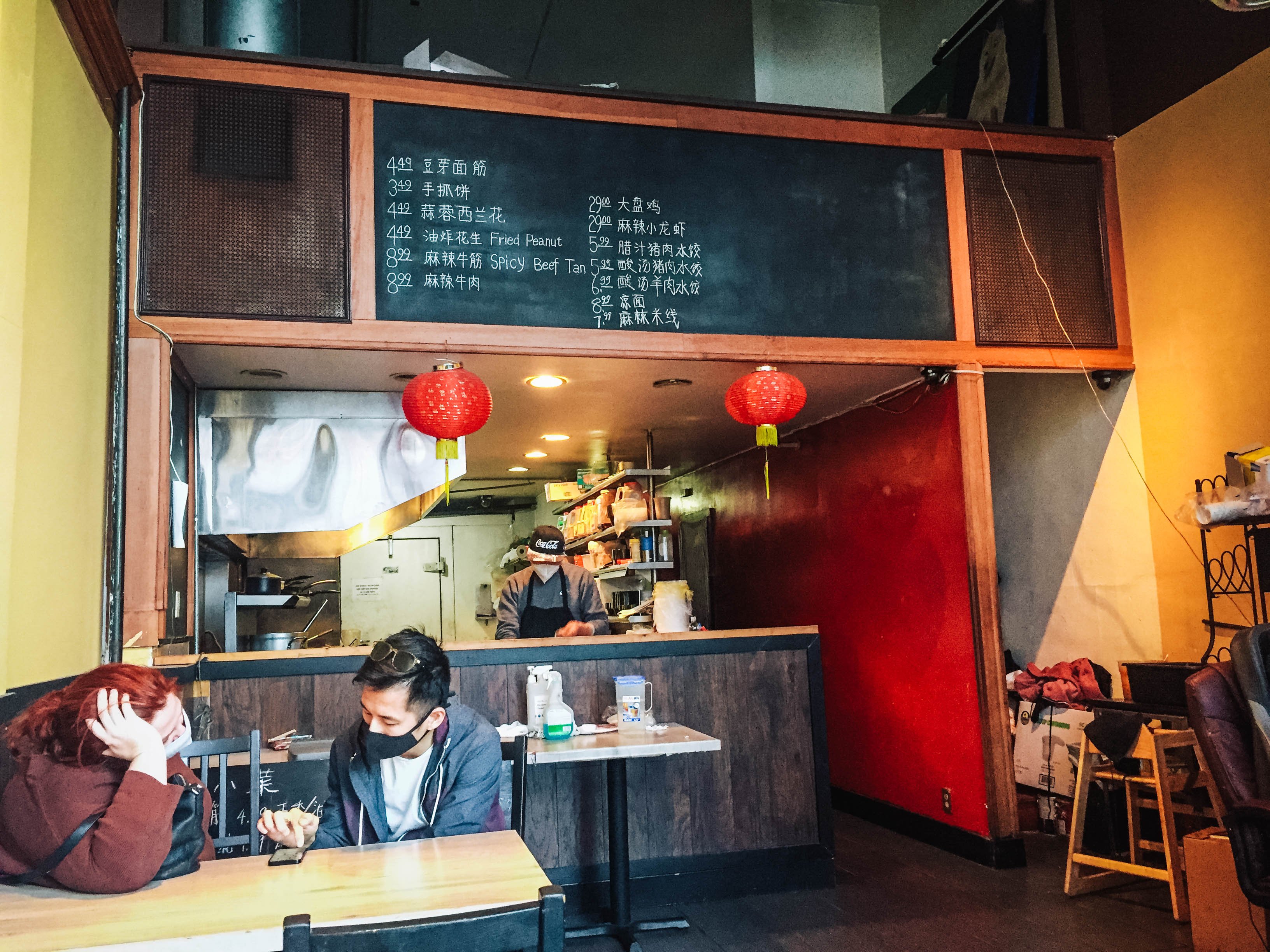
The cook doubles as a server, the whole operation a one-man show. I chuckled to myself when I saw the “Okay” food safety rating on the door—oddly a good omen in terms of the joint’s legitimacy, reminding me of many a place where I dined during my time traveling Asia. I’m usually one of the only non-Mandarin speakers there when dining in, also a good sign.
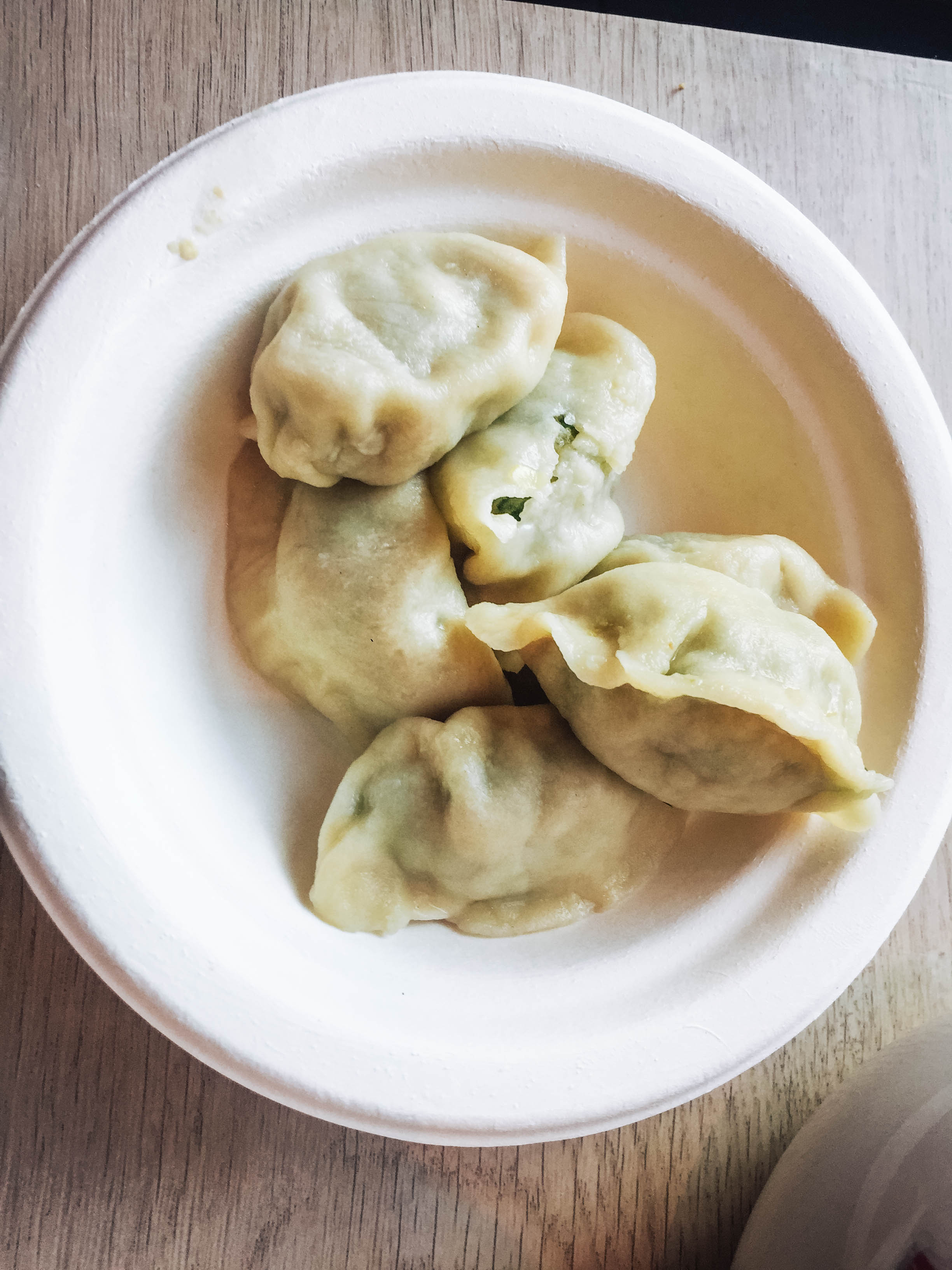
The sole employee brings you water in a paper cup and a laminated menu upon seating. Interactions are pleasant but minimal—he’s a busy man. The plump handmade dumplings are a tasty starter and reasonably priced, but as many a Google review will tell you, the real shining star here is the biangbiang noodles.
According to China Daily, the word ‘biang’ doesn’t technically exist in any modern Chinese dictionary—it’s actually an onomatopoeia of the sound made when the chef sculpts the dough into said noodles, slapping them against the table. Once the cook grabs your order, you can watch him artfully hand-pull the wide, endless ribbons of dough in the kitchen, a fluid and seemingly involuntary movement for him.
You can pick two or three sauces, though I stuck with the ground pork and hot oil every single time. And dooooood. Just thinking about those thick, soft noodles with the perfect amount of chewiness—drenched in a glossy chili oil the color of a deep sunset, flecked throughout with juicy motes of ground pork—ughhhhh. Goodness. Might need to step away from the computer for a moment.
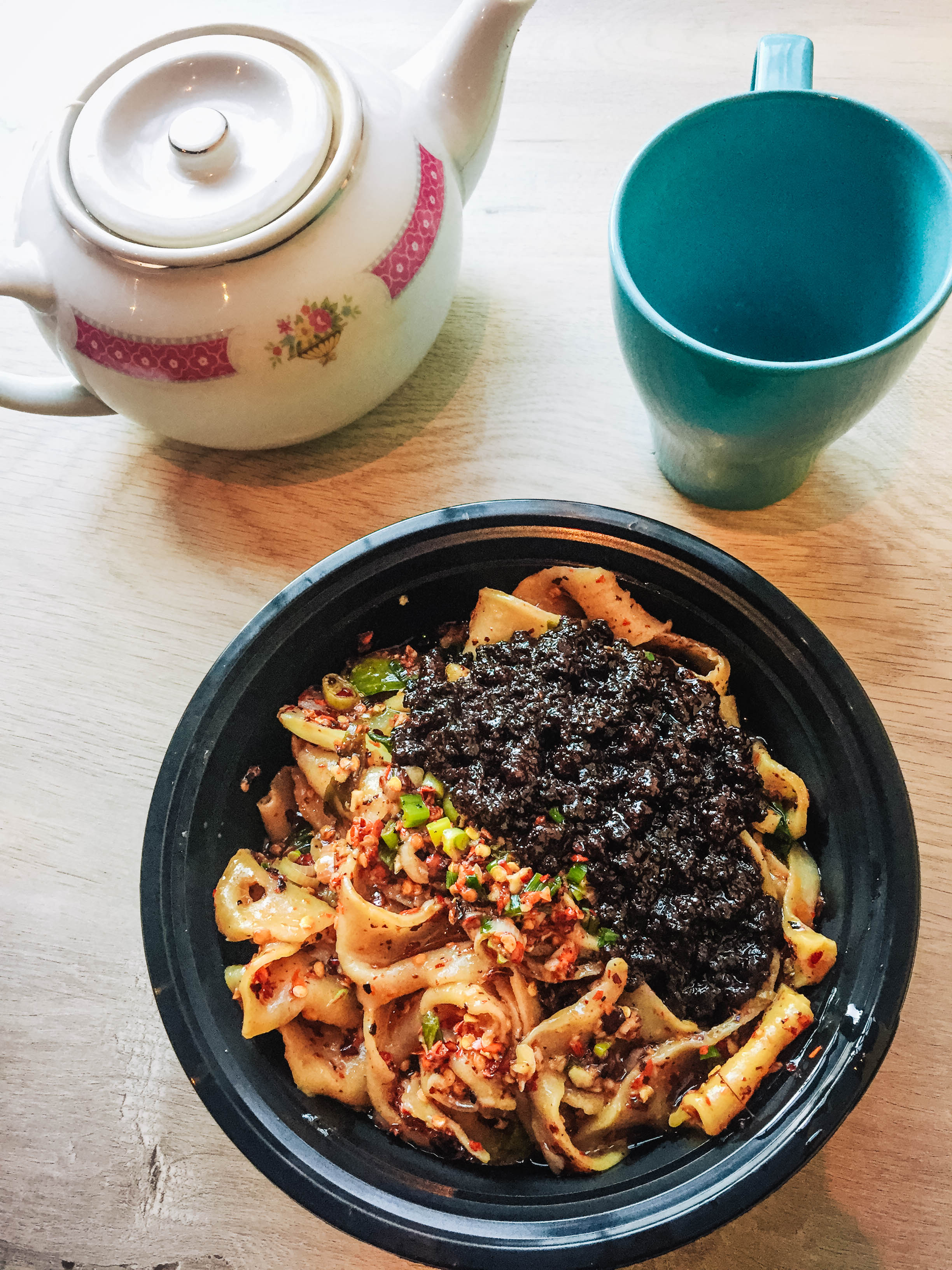
The portions here are pretty healthy, and you’ll more than likely be taking some home. Noodles or no, I brought home the leftover chili oil every single time to reuse on other dishes in my kitchen—liquid gold, I tell you.
Since my iPhone photos don’t really do this deliciousness justice, I’ll let Cindy Linh’s photography shine.
Ooink ($$)
For some of the best ramen you’ll ever have in your life.

I realize that’s a bold claim, especially having yet to set foot in Japan. (Damn you, COVID.) And as with any metropolis these days, there’s an absurd amount of ramen spots in Cap Hill—and the greater Seattle area in general—and I’ve tried a fair amount of them. But this is far and away my favorite spot.
Ooink has a variety of ramen options, ranging from traditional styles to more unique and multiculturally-inspired flavors. In addition to ramen, they offer Malaysian fried chicken wings (ayam goreng), gyoza, and a spicy chicken sandwich, all of which look bomb. “Our bowls of ramen not only go hand & hand [sic] with the weather of the city but hopefully can be a piece of home for the vast culture & tastes that make up Seattle’s citizens,” their website states. Aww. Yes, please.
While mulling over their many options, the clerk informed me that the Szechuan-influenced Mala Kotteri is the most popular item on the menu. And with good reason—it’s hands down the best ramen I’ve ever had, a sentiment you’ll see often repeated throughout online reviews.
Named Ooink because “the pig is often the star of the show,” I probably should’ve tried their regular ramen for comparison, as I’m sure the pork broth sings all on its own. Mala sauce is a mixture of Szechuan peppercorn and chili oil; the word Mala itself is a Mandarin word combining the Chinese characters ma and la, meaning “to numb” and “spicy.” Kotteri signifies the density of the broth, and according to Serious Eats, “Kotteri broths will be thick, sticky, and usually opaque, packed with emulsified fats, minerals, and proteins from long-boiled bones.” 😍
Their Mala Kotteri is just so unique—I’ve had other black garlic ramens, but none with the same depth of flavor as this one. Made with fresh homemade wheat noodles and the standard trimmings (egg, green onions, bamboo shoots), what really makes this ramen stand out is the black garlic oil, garlic chips, and the quality of the pork chashu.
It should be stated that if you’re anything less than a garlic zealot, this might not be the right ramen for you. The black garlic oil is so silken and rich, a dark and shimmering swirl penetrating the pork bone broth like black magic. (With a hypnotic level of flavor that can bring you to your knees, maybe it is.) The fried garlic chips are a crunchy rush of roast garlic goodness in each bite, a more-than-welcome surprise that really livens up the traditional fixings alongside them.
I have to admit that pork chashu is usually an afterthought for me in a bowl of ramen, having been left unimpressed by the majority of pieces I’ve encountered. The effect for me is generally underwhelming—mostly lank slices huddled in with the other ingredients, on the drier side and average in flavor. But Ooink’s pork chashu is exceptional—a hearty cut of pork belly as thick as a small slice of meatloaf, with a buttery, melt-in-your-mouth texture. Super tender and lousy with flavor. I read in a review that each piece of pork belly takes four days to prepare, which makes sense given the in-depth flavor and fall-apart-when-your-chopstick-so-much-as-nudges-it tenderness.
Even as a devoted spicy food lover, I’d still recommend going easy with the spice level on your first bowl—it’s pretty intense. I would usually tell the clerk 1.5 – 2 (out of 4), which still had my mouth a little numb by the end of every meal.
I literally slurp up all of the broth every time. Washed down with a crisp Sapporo, it’s the perfect cold-weather meal. The store is about the size of a shoebox, so you may have to wait for a table if dining in, but I promise it’s well worth it.
Tamari Bar ($$)
For creative and high-quality sushi, cocktails and pan-Asian fare.
It probably won’t shock you when I say that the first two restaurants on this list are my favorites. While the food at Qin Xi’an and Ooink are top-notch, I’ll admit that atmosphere-wise, they’re a little pared down and leave something to be desired. This is why when a friend from home and her boyfriend were in town and specifically requested Asian, I took them to Tamari Bar.
Tamari Bar is a swanky modern Izakaya-style restaurant with a diverse and creative menu, offering high-quality sushi, classic Japanese dishes, and Asian-fusion-inspired plates. You’ll see traditional Japanese eats like chicken kara-age and teriyaki bento boxes on the menu, as well as bold and distinctive culinary strokes like Tamari Bar poutine, cilantro pesto udon, and curry beef bibimbap.
My favorite item is the Dan Dan Ramen, a unique blending of the Szechuanese classic dandan noodles paired with a miso soup base and topped with kuro-bata pork, Japanese red chile pepper, scallions, and a black garlic sauce. (I know, I have a type.)
If you can, opt for the patio—lit by cream and poppy-colored paper lanterns, the semi-enclosed pavilion is super cozy and would make a perfect spot for date night. All the food I’ve had there has been incredibly tasty, including their selection of buns and pork lettuce wraps served with gochujang and a homemade orange pesto.
With drinks and appetizers thrown in, it may not be the cheapest option on this list, but the presentation and taste will be on point. My friend texted me a week later that she “couldn’t stop thinking about that dinner,” adding that it was probably in the top 5 meals of her life.
Lionhead ($$)
For premium Chinese take-out favorites and inventive cocktails.

An upscale Szechuan-inspired restaurant in the Capitol Hill area, Lionhead is the brainchild of James Beard award winning chef Jerry Traunfeld. Featuring an innovative cocktail menu and an extensive array of dressed-up take-out favorites, Lionhead is also home to the largest selection of baijiu in Seattle.
I came in during a happy hour specifically to try their dan dan mien. Like Tamari Bar, Lionhead isn’t exactly bargain-priced, but their food is flavorful and locally sourced and the portions are massive. They use Szechuan peppercorn liberally throughout their menu—it’s featured in the logo, after all—so be sure to keep your water glass handy.
Dough Zone ($$)
For a tasty, well-priced variety of dim sum-style dumplings, noodles, buns and soups.
So Dough Zone breaks a few rules here, as the downtown location’s technically a liiiittle outside the traditional bounds of the Capitol Hill neighborhood. I also generally try to highlight smaller local restaurants as opposed to franchises—but this 7-year old brand was started in Seattle, so they kind of get a pass? Though they have chains as far south as NorCal, they currently have less than 10 locations, putting them pretty low on the corporate evil scale in my opinion.
Technically called a “dumpling house,” their menu feels more like dim sum to me. The price point is sound, and their menu offers various dumplings (steamed, boiled, or pan-fried), soups, noodles, and sides.
While the noodles are decent, it’s really due to the sheer variety of dishes (and favorable prices) that this place makes the list. Service is quick and efficient: they offer you a paper sheet where you write in the number of orders for any particular item, which gradually arrive a la carte.
This place is certainly popular—sometimes they have a sizeable wait, though turn-around time is pretty quick. Their dandan noodles are basic but tasty, and the xiao long bao and wonton soup are pretty solid.
So there you have it—my top five faves for reasonably-priced spicy noodles in Seattle’s Capitol Hill neighborhood.
For those who’ve been to Seattle, what were your favorite restaurants? If you have any suggestions for absolute musts re: the pursuit of noodles in the Emerald City, feel free to leave them in the comments.
 blogdungsroman